
Greyhound racing betting odds explained
 Available in US
Data current as of 27 October 2026. Operator details checked against the Gambling Commission’s public register.
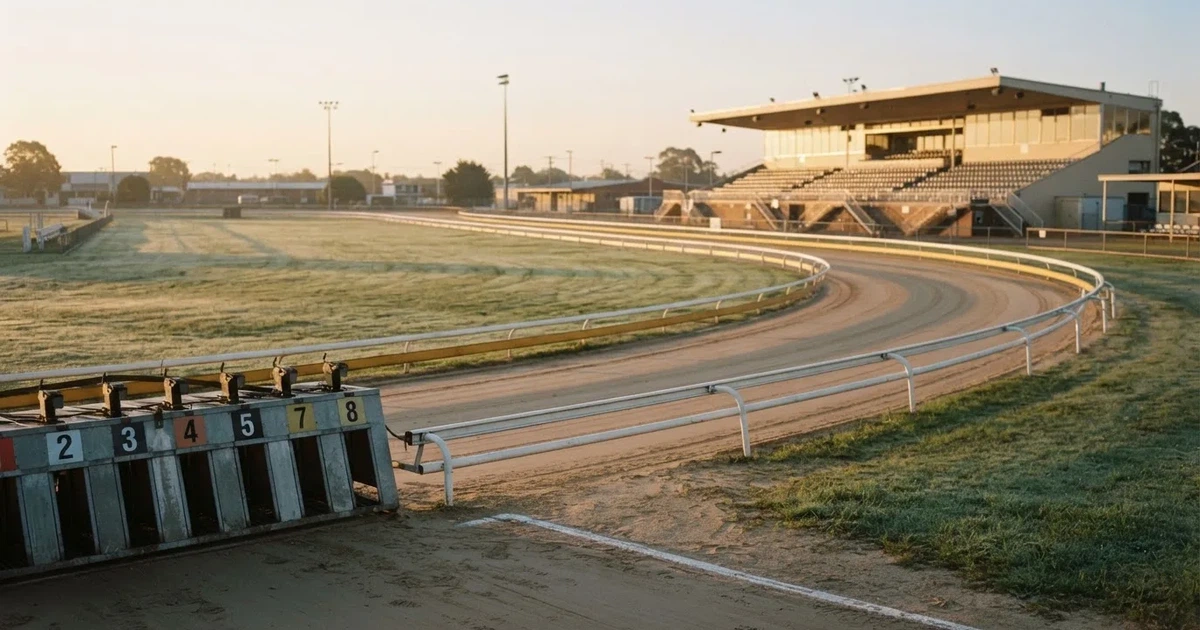
Greyhound racing odds are the numbers next to each trap number in a racecard, and the spread between them is where the bookmaker earns. A race at a licensed British stadium carries six runners, sometimes eight, and a market of two or three digits per runner. The first question a punter faces is rarely “which dog wins” — it is what the price is paying and what the bookmaker is taking off the field. That is the gap this page walks through: the markets on offer, the way prices are built, the licences that let a brand take a bet in Great Britain, and what each of the ten reviewed operators actually does for greyhound punters.
In-running greyhound markets and cash out
Momentum on a greyhound race is short. From the boxes opening to the first bend is a handful of seconds; from there to the line is rarely more than half a minute. In-running betting exists precisely because so much can change in that window — a slow start, a bumped runner, a leader who folds early — but it has to be priced fast enough to keep up with the trap-to-trap swing. The best platforms with live greyhound betting odds are the ones that take a price before the off and let the punter close it out before the finish, rather than the ones that quote a sluggish in-play line ten seconds too late.

In-play on greyhounds is offered by GB-licensed bookmakers as a market under their own licence conditions, not as a regulated category in its own right. The control sits with the operator: which races go in-play, how wide the spread sits, when the market is suspended, and whether a cash-out button appears at all. A greyhound in-play bet that wins is paid out at the price shown on screen at the moment of placement; if the operator suspends the market mid-race, unmatched stakes are voided.
Cash out turns the same idea into a button. A punter who has backed a dog at 4.0 can cash out part or all of the stake once the price shortens, locking in profit before the finish. The trade-price one makes is the operator’s own offer — it is not a market price and may be lower than a lay price on an exchange — and the operator reserves the right to suspend it. Where cash out is missing, the bet sits to the finish.
For greyhound racing specifically, two practical limits apply. First, in-running markets are typically available only on televised races or those the operator has priced up live; smaller weekday cards at lower-grade tracks may not run in-play at all. Second, cash-out values can move sharply in the final straight as the algorithm re-prices the field, so the button is rarely worth pressing in the last second. The discipline of when to take the trade-price one and when to leave the bet alone is the skill in-play demands.
A live greyhound racing bet today is more often placed through a mobile app than a desktop site, simply because punters tend to watch the racing stream on a phone. That is the practical reason in-play matters more to greyhound racing than to sports with a longer rhythm: the screen, the stream and the bet button live on the same device.
Greyhound tips, predictions and staking strategy
Greyhound racing betting tips are forecasts of which dog wins a given race. They range from a tipster’s name on a sheet through form figures and sectional times to algorithmic models built on past results. None of them know the outcome of a six-dog race before it is run, and any system that claims otherwise is selling certainty that does not exist. What a tip does is move the price — when enough punters follow a tip, the bookmaker shortens the favourite and lengthens the others — so the value of a tip is partly the tip and partly what the rest of the market does after it.

Greyhound racing betting strategy is the broader question of how a punter sequences bets, sizes stakes and chooses markets. Three honest starting points.
First, bankroll. A punter who decides in advance that one race in seven is a bet — and stakes one unit each time — has a defined edge to defend and a defined loss to absorb. A punter who backs whatever looks lively on the day has neither. Greyhound betting systems that promise a return on a flat stake ignore the fact that every bookmaker prices in a margin, and a flat-stake system loses on average by that margin per bet.
Second, price. Best odds guaranteed (BOG) means the bookmaker pays the starting price if it is higher than the price the punter took. The greyhound starting price is the on-course fixed-odds price when the race begins, set independently of any individual firm. A punter who takes 4.0 and the SP returns 6.0 is paid at 6.0; if the SP is 3.5, the punter keeps 4.0. BOG is not universal and is sometimes restricted to certain meeting types — it is worth checking the small print of any welcome offer that mentions it.
Third, market. Greyhound bets split into win and place markets, forecasts and tricasts (picking first and second in order, or first, second and third), and exotic markets such as the quinella. Each carries a different margin. The bookmaker keeps a larger share on exotic markets because fewer punters price them accurately; that margin is the silent tax on betting beyond the win market.
Free greyhound betting systems marketed as winning routines are usually staking plans: a way to recover losses by raising stakes after each losing bet. The arithmetic of these plans, run on a market with a built-in margin, is that a long enough losing run wipes the bank. The plan survives only because the losing runs have not yet arrived.
What a serious punter does instead is read form. Sectional times, the going (the track surface condition), the grade of the race, the box draw (trap number) and the trainer-kennel combination all carry information. None of them predict a winner with certainty; all of them narrow the field. The honest answer to “how to win greyhound betting” is that nobody can promise a win, and a punter who treats the form as a way to find value prices — bets whose true probability is higher than the bookmaker’s implied probability — has the only method that pays over the long run.
How greyhound bet types are priced
The greyhound bet types break into two layers: single-race bets, and combination bets across races. Each has its own odds and its own margin.

Singles, each-way and place markets
A single is a stake on one dog to win. The stake returns the stake plus winnings at the odds shown. Decimal odds of 4.0 on a £10 stake return £40 — £30 profit, £10 stake back.
Each-way is two bets of equal stake: one on the dog to win, one on the dog to place. The place terms vary by race and operator; bookmakers typically pay a quarter of the win odds for two places in a six-runner race, a fifth of the odds for three places in a larger field. A £10 each-way stake costs £20. If the dog wins at 4.0, the win part returns £40 and the place part returns £10 plus the £5 stake, minus the standard place adjustment.

Place-only bets — backing a dog just to place, without the win leg — are offered by some bookmakers and carry shorter odds than each-way, since the place market is narrower.
Forecasts, tricasts and quinellas
A forecast bets on first and second in the correct order; a tricast adds third. A reverse forecast bets on first and second in either order. These markets carry bigger odds because they are harder to land, and they carry a bigger margin because fewer punters price them accurately. A tricast on a six-dog race has 120 possible outcomes.

A quinella bets on first and second in either order; in many bookmakers it is folded into the reverse forecast.
Combination bets across races
A double is two singles chained together — the return of the first becomes the stake of the second. A treble is three. The combined odds multiply: two legs at 3.0 and 4.0 produce a combined price of 12.0. An accumulator (“acca”) extends the chain to four or more legs. Each added leg multiplies the odds and shortens the probability of landing; the bookmaker’s edge compounds with every leg.
Multi-leg bets are where enhanced odds and acca insurance sit. Enhanced odds raise the price of a named combination; acca insurance refunds the stake (often as a free bet) if one leg lets the punter down but the rest win. Both are offers that change the return, not the underlying probability.
The ante-post greyhound bet
Ante-post greyhound betting is a bet placed before the final declarations are known. The price reflects the field at the time of betting; if the dog does not run, the stake is usually lost rather than refunded. The greyhound ante-post market is a long way from the off, and prices move as the field firms up — ante-post is for punters willing to take a non-runner risk in return for a bigger price.

Greyhound spread betting
Greyhound spread betting is a separate product from fixed-odds betting. The punter “sells” or “buys” a number — for example, the winning margin in lengths — at a stated stake per point. The return is the difference between the spread and the outcome, multiplied by the stake. A punter who buys at 1.5 lengths and the winning margin turns out to be 3.0 lengths wins 1.5 × stake; the same bet with a winning margin of 0.5 lengths loses 1.0 × stake.
The regulator is different too. Financial spread betting is regulated by the Financial Conduct Authority; spread bets that are not on a financial instrument fall under the Gambling Commission. Either way, greyhound racing spread betting losses can exceed the original deposit — that is the structural risk of any spread product, and the reason the FCA requires clear warnings. Spread betting is not the same instrument as a fixed-odds bet, and a punter who treats it as such misreads the risk.
The bet calculator
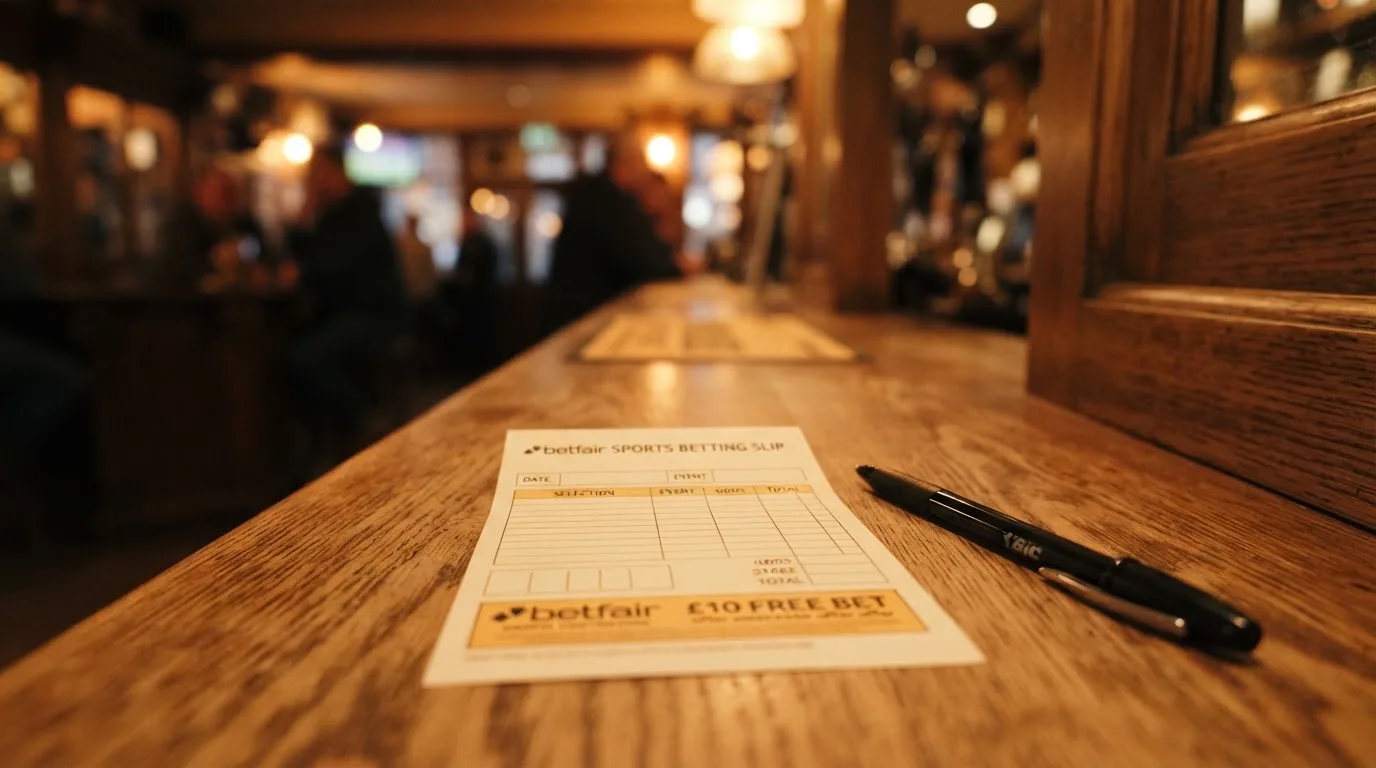
A greyhound bet calculator is a tool that works out the return on a given stake at given odds, including each-way and combination bets. The arithmetic is simple for singles, gets longer for accumulators, and is most useful for working out whether a combination bet is worth the stake at the prices available. A punter who can run the numbers before placing the bet is harder to mislead by a headline price.
Where greyhound racing sits in the British racing calendar
Greyhound racing in Great Britain is regulated by the Greyhound Board of Great Britain (GBGB), which has 18 licensed stadia. The sport runs most evenings of the week; meetings range from weekday cards at smaller tracks to weekend graded fixtures at the larger venues. There is no statutory list of permitted sports or markets, so greyhound racing sits on a GB-licensed site’s racecard as a category the operator chooses to offer under its licence.
The fixture list is dense. Saturday evenings carry multiple graded races; weekday afternoons and evenings carry open races and maiden events. The greyhound derby — the sport’s flagship staying event — runs annually and carries ante-post markets weeks in advance.
Internationally, greyhound racing is a different story. Greyhound racing in New Zealand was ended by the Racing Industry (Closure of Greyhound Racing Industry) Amendment Act 2026, passed on 2 April 2026, with the phase-out set for 1 August 2026. Winston Peters announced on 10 December 2024 that greyhound racing in New Zealand would be banned and phased out by 2026. Before the ban, Greyhound Racing New Zealand (GRNZ) organised seven affiliated clubs: Auckland, Waikato, Whanganui, Palmerston North, Canterbury, Otago and Southland. None of those tracks takes bets from British punters.
The wider picture is that greyhound racing is a niche in the British betting market compared with horse racing and football. That has a practical consequence: fewer markets per race, less liquidity on the bigger-priced runners, and odds that move more sharply when one or two punters strike a price. A market on a six-dog Tuesday maiden at a lower-grade track will be a thinner book than a Premier League match on the same evening.
What the trap number does to the odds
The box draw (trap number) matters more in greyhound racing than in horse racing. The inside traps have a shorter route to the first bend; the outside traps have to go wider. Bookmakers price this in: a strong dog drawn in trap one is a shorter price than the same dog drawn in trap six. Sectional times confirm the bias is real. A greyhound betting odds sheet that ignores the draw is reading past the most consistent variable in the form book.
Ten bookmakers for greyhound racing odds compared
The brands in this comparison all hold a Gambling Commission remote licence for general betting standard (real events). They are presented in the order research has set, not as a ranking. Each card answers two questions: what the brand offers on greyhound racing, and what the reader checks before signing up.
| Brand | Gambling Commission remote licence | Licence holder | What the operator’s own terms state |
|---|---|---|---|
| Fitzdares | 000400-R-103839-030 (account 400) | Fitzdares Limited | Cash out, accumulators, Lucky 15s, specials and antepost markets on horse racing, football, tennis, rugby, cricket, golf and American football, with in-play live odds. |
| Geoff Banks | 054095-R-330366-010 (account 54095) | GB Sports Advisors Limited | Live in-play prices and ante-post prices on future events. |
| Bar One Racing | 056516-R-332750-007 (account 56516) | Bar-One Racing Limited | Irish independent bookmaker with shops across Ireland and horse racing sponsorships at Dundalk, Fairyhouse, Navan, The Curragh, Curraheen Park and Cork; rebranded as BAR 1 Betting. |
| Bet Ahoy | 100094-R-341742-003 (account 100094) | Bet Ahoy Ltd | Welcome offer: Bet £10 & Get £10 in Free Bets, made up of a £5 sports bet and a £5 acca. |
| Fitzwilliam Sports | 048760-R-335434-009 (account 48760) | SBKI Limited | Dublin bookmaker with capped membership; instant deposits, fast withdrawals, timeouts, deposit limits and links to GambleAware, GamStop and Gamblers Anonymous; welcome offer is a “High Stakes Welcome” subject to compliance criteria. |
| Paddy Power | 039439-R-319330-013 (account 39439) | PPB Counterparty Services Limited | Covers football, horse racing, boxing, rugby, tennis, golf, darts, snooker and F1. |
| Coral | 054743-R-330863-014 (account 54743) | LC International Limited | Sports welcome offer: Get £40 in Free Bets when you bet £20 — £20 stake at minimum odds of 2.0 (1/1), with £40 in free bets issued within 7 days and expiring 7 days after issue. |
| London Bet | 066162-R-340278-004 (account 66162) | Thistle Bet Limited | Combines sports betting (football, tennis, horse racing, greyhounds, darts, golf, cricket, NFL, NBA, MLB, snooker) with Pragmatic Play casino slots and live in-play betting. |
| Betmaster | 029826-R-321613-005 (account 29826) | BM Solutions GB Ltd | Covers football, cricket, horse racing, NFL and eSports (League of Legends, Dota 2) betting. |
| Swifty Sports | 058957-R-334734-006 (account 58957) | Swifty Global (UK) Ltd | Best Odds Guaranteed, Cash Out on markets including horse racing and football, daily price boosts, live streaming and in-play betting; Bet Builder listed as coming soon. |
The licence figures are taken from the Commission’s public register; the licence holder is the company named on that register. Several brands in the wider market run under one licensee — Ladbrokes and Coral both sit under LC International Limited, for example — and the column “Licence holder” makes that explicit. A punter who searches the register by domain will sometimes find the parent company’s name rather than the brand’s trading name.
Three points are worth underlining before the per-brand write-ups. First, the table covers greyhound racing only in the rows that name it; the others do not exclude greyhound racing but it is not confirmed whether it appears in the racecard. Second, the welcome offers are quoted as each operator states them — the figures travel with the small print, and the section on bonuses walks through what those small print cost. Third, “Best Odds Guaranteed” is not a universal entitlement; Swifty Sports lists it, others do not. A punter whose only reason to back a dog early is the promise of a higher SP needs to check that the chosen bookmaker offers it.
Fitzdares
Fitzdares runs a premium horse-racing-led product with cash out, accumulators, Lucky 15s, specials and antepost markets, and in-play live odds. The mobile app carries the same product range. Greyhound racing sits inside that mix as a category the firm prices up; ante-post markets on the bigger greyhound events appear with the horse-racing antepost board. A punter who values the ante-post greyhound market and wants the same operator’s horse-racing depth will find the product fits; a casual greyhound-only bettor will pay for features they do not use.
Geoff Banks
Geoff Banks’ app is published by GB Sports Advisors Ltd and offers live in-play prices and ante-post prices on future events. The product is built around the racing markets; greyhound racing appears as part of that. Live in-play is a deliberate cover but the racing schedule is the spine. A punter who already has a main bookmaker and wants a second opinion on a greyhound in-running price will find it useful; a punter who needs the full feature set of a major operator will not.
Bar One Racing
Bar One Racing has rebranded as BAR 1 Betting, an Irish independent bookmaker with shops across Ireland and horse racing sponsorships at Dundalk, Fairyhouse, Navan, The Curragh, Curraheen Park and Cork. The online product carries the racing-driven ethos of the shops. Greyhound racing is on the racecard; the depth of market follows the same template. A punter who values the Irish-shop heritage and the racing sponsorships is the natural reader; those seeking exotic greyhound markets will find better coverage elsewhere.
Bet Ahoy
Bet Ahoy’s welcome offer is “Bet £10 & Get £10 in Free Bets”, made up of a £5 sports bet and a £5 acca. The site carries a GB licence and a stake-sized welcome that suits a casual first-time punter. Greyhound racing appears in the sportsbook. Those seeking a small, manageable welcome offer and a straightforward racecard will find it suitable, though the overall coverage is limited compared to larger sportsbooks.
Fitzwilliam Sports
Fitzwilliam Sports describes itself as a Dublin bookmaker with capped membership, and its welcome is a “High Stakes Welcome” subject to compliance criteria. The site offers instant deposits, fast withdrawals, timeouts and deposit limits, and links to GambleAware, GamStop and Gamblers Anonymous. A capped-membership bookmaker is a different proposition from a mass-market brand: the welcome is sized for higher-stake accounts and the membership ceiling is a deliberate cover. A punter whose staking is high enough to meet the compliance criteria will find the welcome is generous; a punter who does not is excluded for the upper stakes.
Paddy Power
Paddy Power’s app covers football, horse racing, boxing, rugby, tennis, golf, darts, snooker and F1. Greyhound racing is one of the racing categories the firm prices up; the in-play offering and the price boosts are built around the bigger sports. Punters seeking a mass-market brand with football in-play depth will find it fits; those looking for a specialist greyhound platform should consider a dedicated provider.
Coral
Coral’s sports welcome offer is “Get £40 in Free Bets when you bet £20”: a deposit and sports bet of £20 or more at minimum odds of 2.0 (1/1), with £40 in free bets issued within 7 days and expiring 7 days after issue, for new GB customers who opt in. The site carries a GB licence and a wide racecard; greyhound racing is one of several racing categories. Punters prioritizing a substantial free-bet welcome and a well-known mainstream brand will find this suitable, though the promotional details—such as expiry and minimum odds—require careful reading.
London Bet
London Bet’s app combines sports betting (football, tennis, horse racing, greyhounds, darts, golf, cricket, NFL, NBA, MLB, snooker) with Pragmatic Play casino slots and live in-play betting. Greyhound racing is named explicitly in the sports list, alongside horse racing. Those wanting to combine greyhound betting with a casino product will find this suits their needs, as the racing section serves as part of a wider entertainment offering rather than the primary focus.
Betmaster
Betmaster’s app is published by Bm Solutions Gb Limited and covers football, cricket, horse racing, NFL and eSports (League of Legends, Dota 2) betting. Greyhound racing does not appear in the named list. This is not the platform for a greyhound specialist; the racing product is horse-focused, while the sportsbook heavily prioritises football and eSports.
Swifty Sports
Swifty Sports offers Best Odds Guaranteed, Cash Out on markets including horse racing and football, daily price boosts, live streaming and in-play betting; Bet Builder is listed as coming soon. Greyhound racing appears in the racecard alongside horse racing. A punter who wants BOG on greyhound racing and an in-play product will find it fits; the Bet Builder gap is a known absence.
How greyhound betting is regulated in Great Britain
The Gambling Commission (UKGC) is the regulator. It licenses the whole commercial market under the Gambling Act 2005, which covers Great Britain — England, Scotland and Wales. Northern Ireland is outside the Act and has its own older law. Since the Gambling (Licensing and Advertising) Act 2014 an operator whose remote facilities are used in Great Britain needs a Commission licence wherever it is based; a Curaçao, Maltese or Gibraltar licence is not a substitute.
The Commission’s public register is searchable by business name, trading name, domain or account number. It is the whole test of whether a brand holds a GB licence. The register lists the licence number, the categories of licence (remote general betting standard (real events) is the one that covers greyhound racing), the licence holder and the trading names it operates. A punter who wants to check a brand opens the register and types in the domain or company name. There is no shortcut.
Several licence categories exist. Remote general betting standard (real events) is the standard sportsbook licence, covering greyhound racing. Remote general betting standard (virtual events) is a separate category for virtual sports. Remote pool betting covers pool products on horse and dog racing. Remote betting intermediary is the exchange licence. A bookmaker that prices up greyhound racing on its sportsbook holds the remote general betting standard (real events) licence.
Minimum age is 18. Identity verification — name, address and date of birth — happens before the first deposit or bet. That is the trade-off a GB licence imposes: no anonymous play, in return for the consumer protections that come with the licence. A punter who objects to the verification step is, by definition, choosing an unlicensed site — and losing the protection that comes with the licence.
Financial spread betting sits under the Financial Conduct Authority. Spreadex is regulated by the FCA for spread betting and by the Gambling Commission for fixed-odds betting, and states that spread betting losses can exceed the deposit. A punter who uses the same firm for both fixed-odds greyhound bets and a spread product on the same race should know which side of the firm’s licence each bet is on.
What an unlicensed site costs the punter
Providing gambling facilities in Great Britain without the licence the Act requires is an offence. It is not an offence aimed at the customer who bets on such a site — but the customer loses what the licence buys. There is no GAMSTOP coverage, no Commission complaints route, no approved dispute-resolution body and no British consumer redress if funds are withheld. The 10x bonus cap and the £150 financial-vulnerability check do not apply, because the operator is not subject to them in the first place. The honest framing is not “illegal to use” — it is “no protection if something goes wrong”.
Enforcement is disruption, not blocking: cease-and-desist notices, search-engine referrals, work with registrars, hosts and payment providers; the Commission has been given, or is about to receive, court-order DNS blocking powers. A punter who reads “blocked by ISPs” as the current state will be wrong; ISP blocking is not in operation. What is in operation is the regulator’s broader work to make unlicensed sites harder to reach.
Responsible gambling on greyhound racing
GAMSTOP is the national multi-operator online self-exclusion scheme, and a mandatory licence condition for online operators. A punter who registers with GAMSTOP is excluded from every GB-licensed online site and app for the chosen period — six months, one year, five years, or five years with auto-renewal. After the minimum period, the exclusion stays in place for a further seven years unless the punter asks GAMSTOP to remove it. It covers online sites and apps; betting shops use a separate service.
The financial vulnerability check is a public-record check — for example, bankruptcy or county court judgments — applied to licensed remote betting when a customer’s deposits minus withdrawals exceed £150 in a rolling 30 days. It is not an income check and not a credit reference check. The threshold is a flag, not a block: the operator checks the public record, decides whether to proceed, and may ask source-of-funds follow-up questions. A punter whose deposits net of withdrawals cross £150 in a 30-day window can expect a check.
Financial risk assessments — the affordability checks widely reported in the press — were announced in a staged plan in a Commission article of 7 July 2026, with no start date. The honest framing is “announced, staged, no start date”, not “in force”. Until a start date is published, the check is policy, not a condition the punter meets today.
Deposit limits are the punter’s choice; the operator must offer them under Remote Technical Standards, but no state-set ceiling exists. A punter who wants to cap greyhound-racing deposits can set a daily, weekly or monthly limit; the operator is required to honour it.
Help is available beyond the operator. GamCare runs the National Gambling Helpline. GambleAware funds treatment and support. The NHS runs gambling clinics in several regions. Gamblers Anonymous runs peer-support meetings. Fitzwilliam Sports links to all three of GambleAware, GamStop and Gamblers Anonymous on its site. Every GB-licensed brand operator links to at least one of them.
Bonuses and free bets on greyhound racing
Greyhound betting offers and greyhound racing betting offers arrive as welcome packages, free bets and acca insurance. They arrive with conditions. The arithmetic of an offer is the wagering requirement multiplied by the bonus base, plus the minimum price for a qualifying bet, plus the deadline for clearing, plus any cap on winnings from a free bet.
Coral’s sports welcome offer is “Get £40 in Free Bets when you bet £20”: a deposit and sports bet of £20 or more at minimum odds of 2.0 (1/1), with £40 in free bets issued within 7 days and expiring 7 days after issue. The qualifying bet is £20 at minimum odds 2.0 — anything shorter, and the bonus does not land. The free-bet stake is not paid back on a win; a £10 free bet at 4.0 returns £30, not £40. The free bets expire 7 days after issue; a punter who does not use them loses them. That is the standard cost of a free-bet welcome: the qualifying bet pays for itself if it wins, the free-bet stake is sacrificed on every win, and the deadline cuts off any punter who forgets.
Bet Ahoy’s welcome offer is “Bet £10 & Get £10 in Free Bets”, made up of a £5 sports bet and a £5 acca. The structure is the same shape as Coral’s — qualifying bet plus free-bet bundle, with the small print carried over. A punter who wants the smallest qualifying stake will find it here.
Fitzwilliam Sports offers a “High Stakes Welcome” subject to compliance criteria. The compliance criteria are not stated on the home page; the offer is described as sized for higher-stake accounts. A punter who values the size of the welcome over the ease of qualifying will find it fits; a punter who wants a quick small-stake welcome will not.
Promotion rules cap wagering requirements at 10x — a £10 bonus at 50x needed £500 of bets; under the cap no more than £100 — and ban mixed-product promotions that ask a punter to bet on one product type to get a reward on a different one, such as “bet on football to get free spins”. A punter who sees a greyhound-racing welcome offer that crosses 10x in the wagering requirement is being shown an offer that is no longer allowed under GB rules; the operator is in breach if it is being marketed now. A punter who sees a “bet on football to get a free bet on greyhounds” offer is looking at a mixed-product promotion that is also in breach. The cap is in force since 19 January 2026.
A “risk-free” bet refunded as a free bet is not a refund in money. The stake is sacrificed on the free-bet side and the qualifying stake is the punter’s own money. That is the standard contract of a free-bet welcome, and the article-language equivalent of “risk-free” reads as a marketing word, not a statement of fact. A price boost, an accumulator insurance and a cashback each stay what they are: a boost raises a named price for a short window, acca insurance refunds the stake (often as a free bet) if one leg fails, and a cashback returns a share of net losses over a defined period. None of them is a win guarantee.
Greyhound betting on mobile
Greyhound betting apps carry the same product as the desktop site, plus a few additions that only make sense on a phone: a fingerprint login, push notifications for price moves on backed runners, and the in-play experience of watching the stream and pressing the bet button on the same device.
Geoff Banks’ app is published by GB Sports Advisors Ltd and offers live in-play prices and ante-post prices on future events. The app is the natural place to follow an ante-post greyhound bet through the weeks before the race. London Bet’s app combines sports betting with Pragmatic Play casino slots and live in-play betting. Paddy Power’s app covers football, horse racing, boxing, rugby, tennis, golf, darts, snooker and F1. Betmaster’s app is published by Bm Solutions Gb Limited and covers football, cricket, horse racing, NFL and eSports (League of Legends, Dota 2) betting. The Fitzdares app offers cash out, accumulators, Lucky 15s, specials and antepost markets on horse racing, football, tennis, rugby, cricket, golf and American football, with in-play live odds. Bar One Racing has rebranded as BAR 1 Betting, an Irish independent bookmaker with shops across Ireland and horse racing sponsorships at Dundalk, Fairyhouse, Navan, The Curragh, Curraheen Park and Cork.
Unibet states it has operated since 1999, and its UK site is run by Platinum Gaming Limited, Gibraltar, under Gambling Commission account 45322. Unibet is not in the comparison above but the licence detail is illustrative of how a Gibraltar-incorporated operator licences into the GB market — the licence is the Commission’s, regardless of where the operating company sits.
Lottoland UK’s app combines casino, lottery betting, sports betting and scratchcards, and it states it is licensed by the Gambling Commission for customers in Great Britain. bet365 is the official global betting partner of the UEFA Champions League and its app is described as the most downloaded sports betting app in the UK. bet365 offers Bet Builder+ (combining markets from one event into a single bet, available pre-match and in-play), Super Boosts, Winnings Boosts on Bet Builders and selected singles, and daily Bet Boosts. Midnite’s site cites Gambling Commission licence 101839 and shows in-play events, an acca builder, popular accas and price boosts with maximum-stake limits. Kalooki Sportsbook is operated by Kalooki Sports Book Ltd (company number 12938274), licensed by the Gambling Commission under account number 57730, and is a GAMSTOP member.
A greyhound bet app download is offered by the App Store and Google Play for every operator that publishes a mobile app; the question is not download but whether the app’s racecard carries the markets the punter wants. A punter who bets greyhounds primarily from a phone should check that the operator’s app shows the trap numbers, the going and the form before placing a bet — many apps surface only the win market at first glance.
How the margin lives inside every price
The bookmaker’s margin is the share of every pound staked that the firm keeps on average. It is the difference between the true probabilities of the runners and the implied probabilities in the prices. On a six-dog race, a perfectly fair book — one that took no margin — would sum to exactly 100 % in implied probabilities. A real bookmaker sums to more than 100 %, and the gap is the margin.
A worked example is the cleanest way to see it. Take an illustrative two-way market at decimal odds of 1.90 and 1.90. The implied probability of each outcome is 1 ÷ 1.90 = 0.5263, or 52.63 %. Two such outcomes sum to 1.0526, or 105.26 %. The overround is 5.26 percentage points; the payout share — the share of stakes returned to punters in the long run — is 1 ÷ 1.0526 = 0.9500, or 95.00 %. The margin is 1 − 0.9500 = 0.0500, or 5.00 %.
That 5 % is the bookmaker’s edge on the market. A punter who places a stake at random across both outcomes loses 5p per pound staked in the long run, before any selection skill is applied. The bookmaker does not need to know who wins; the margin does the work.
In a greyhound six-dog race with prices that sum to, say, 108 % in implied probability, the payout share is 1 ÷ 1.08 = 92.59 % and the margin is 7.41 %. That is a typical book on a greyhound race — wider than the 5 % on a major football match, narrower than on exotic markets where punters price less accurately. The margin is not a fee the bookmaker charges on a losing bet; it is the silent tax on every bet, winner and loser alike.
A higher margin means a harder book to beat. A punter who wants a higher edge has to find prices whose implied probability underestimates the true probability — value that is a price on a dog that is more likely to win than the market says. The bookmaker’s margin does not change that requirement; it makes it harder, because the overround has to be overcome before any value is captured.
The margin is a band, not a single figure. A bookmaker’s margin on a Premier League match is not its margin on a Tuesday maiden at a lower-grade greyhound track. Even within one race, the margin on the win market is not the margin on the forecast or tricast. The audit’s reading is that the margin belongs to the exact market, exact event, exact bookmaker and exact snapshot date — none of them carry over to the next.
The implication for a punter is to find the markets with the smallest margin first and the selection skill second. A bookmaker offering 1.91 on each of two runners on a major football match is offering a thinner margin than a bookmaker offering 1.85 on each. The first £100 staked across the field loses £5 on average; the second loses £7.50. Selection skill adds on top of whichever base the punter starts at.
Payment methods and verification
Identity verification happens before the first deposit at a GB-licensed site. A punter who cannot pass verification cannot deposit, cannot claim a free bet, and cannot withdraw. The verification step is the trade-off the licence imposes in return for the protection it gives: no anonymous play.
Credit cards are banned for gambling in Great Britain — including credit-card-funded payments through an e-wallet. Debit cards and bank-based payments are not covered by that ban. A punter whose only payment card is a credit card cannot deposit at a GB-licensed site. There is no British named-account rule, no state list of permitted payment methods and no statutory rule for or against cryptocurrency deposits at licensed operators; each operator decides which methods it accepts, and the punter reads the cashier.
Source-of-funds questions arrive at higher spend under the money-laundering rules. A punter whose deposits cross the thresholds the operator sets will be asked for payslips, bank statements or proof of wealth. The question is not optional; the answer is.
The financial vulnerability check at £150 net of withdrawals in 30 days is the layer above the payment method. A punter who passes verification at the deposit step, deposits steadily, and crosses the £150 net threshold will be checked against public records. The check is a check on whether the punter’s finances suggest vulnerability — it is not an income test.
A punter who wants the full picture reads the operator’s terms before depositing: which payment methods are accepted, what the deposit limits are, what the verification asks for, and how withdrawals are processed. The terms are the operator’s own statement of what the punter agrees to, and the small print is the place where most disputes start.
Reading a greyhound racecard
A greyhound racecard carries, for each runner: trap number, dog name, form figures, the trainer and the going (track surface) rating. Some operators add sectional times, recent runs and a forecast verdict.
The form figures read right-to-left as the most recent runs first. A dog’s form of 1214 has won twice and placed twice in its last four starts; the rightmost figure is the most recent run. The trainer matters more in greyhound racing than in some other sports — kennels have form profiles, and a dog from a strong kennel at the track on the day is a different proposition from the same form figures from a less consistent kennel.
The box draw matters. Trap one has a small advantage at most tracks; trap six has a small disadvantage. A bookmaker prices this in, so the advantage is partly in the price the punter takes and partly in the form figures beside it. The discipline is to read both — the price and the form — and not to let either one carry the decision alone.
The going rating describes the track surface. A sand track reads differently from a grass track; a wet track reads differently from a dry one. Some dogs handle the going better than their figures indicate; the going rating and the trainer’s notes give the clue.
What this page does not promise
This page explains how greyhound racing odds work, what markets GB-licensed bookmakers offer, how the margin sits inside the price and how the regulatory frame shapes what a punter does. It does not name a winner of a future race, because nobody can. It does not promise that a tip, a system or a staking plan produces a profit, because no plan beats the bookmaker’s margin in the absence of a real edge. A punter who reads this page and walks away with a method has a working definition of value and a working discipline for the bankroll; a punter who reads it and walks away with a name to back has misread it.
The book’s honest take is that greyhound racing is a thin market, the margin is wider than on football or horse racing, and the discipline of price over selection is the only method that pays. Everything else is marketing.
Frequently asked questions
How do I place a bet on greyhound racing?
Pick a GB-licensed bookmaker, complete the identity verification (name, address, date of birth) before the first deposit, choose a payment method that is not a credit card, and find the greyhound meeting in the racecard. Select a runner, choose a stake, and confirm the bet on the betting slip at the price shown. Single, each-way, forecast, tricast and accumulator are the standard bet types.
How do I bet on greyhound dogs in the UK?
The mechanics are the same as betting on horse racing: choose a runner, pick a market, set a stake, and place the bet at the price shown on screen. Greyhound races run most evenings of the week at one of the 18 GBGB-licensed stadia; ante-post markets on the bigger events run in the days and weeks beforehand.
Can a punter actually win at greyhound betting?
Nobody can guarantee a win. A punter who prices a dog more accurately than the market — finding a price whose implied probability is lower than the dog’s true chance of winning — captures value that compounds over many bets. The bookmaker’s margin has to be overcome first, which is why selection skill alone is not enough; the discipline of price is what pays.
How can a punter check that a bookmaker holds a Gambling Commission licence?
Open the Gambling Commission’s public register and search by domain, company name or trading name. The register lists the licence number, the categories of licence and the licence holder. A GB-licensed site displays its licence number and a link to the register; the punter verifies it by searching. The register is the whole test of whether a brand is licensed.
How is a bet’s return worked out from the stake and the odds?
Return = stake × decimal odds. A £10 stake at odds of 4.0 returns £40 — £30 profit plus the £10 stake. Net profit = stake × (odds − 1). A £10 stake at odds of 4.0 returns £30 profit. For an accumulator, the legs’ odds multiply: 3.0 and 4.0 give a combined price of 12.0; a £10 stake returns £120, of which £110 is profit.
What is a bookmaker’s margin and how does it show in the odds?
The margin is the share of stakes the bookmaker keeps on average. To work it out, convert each price to implied probability (1 ÷ odds), sum the implied probabilities, and subtract from 1. On odds of 1.90 and 1.90 the implied probabilities sum to 105.26 %; the payout share is 1 ÷ 1.0526 = 95.00 %; the margin is 5.00 %. A sum below 105 % is a thin book; above 110 % is a thick one. The margin belongs to the exact market, exact event, exact bookmaker and exact snapshot date.
Payments & apps – Grey Hound
Content created by the «Grey Hound» team
